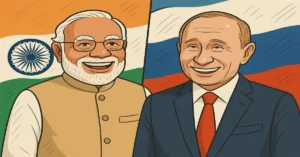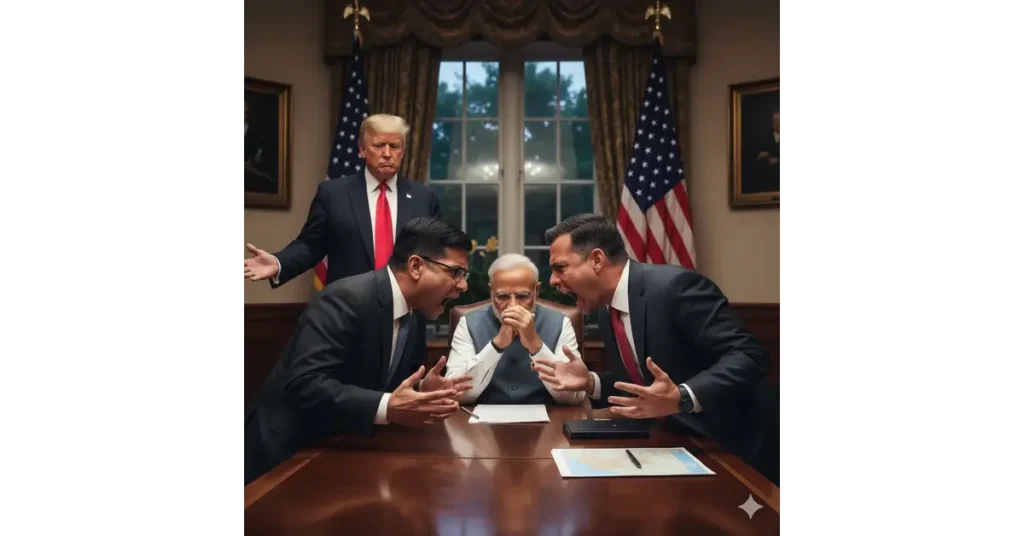
The photo ops were spectacular. In September 2019, 50,000 Indian Americans packed Houston’s NRG Stadium, cheering as Donald Trump and Narendra Modi walked hand-in-hand, their bromance on full display. “Abki Baar Trump Sarkar!” (This time, Trump government!) Modi had proclaimed, endorsing the American president before his own people.
Fast forward to August 2025, and the same Trump who once basked in Modi’s praise now calls the India-US trade relationship “a totally one sided disaster!” The friendship that once seemed unshakeable has devolved into a tariff war, leaving New Delhi scrambling to understand what happened to their supposed ally.
Trump’s mood swings are troubling India more than any other bilateral challenge in recent memory. One day he’s praising Modi as a great leader; the next, he’s slapping crushing tariffs on Indian goods. This erratic behavior isn’t just diplomatic theater—it’s reshaping the foundation of US-India relations in ways that could have lasting consequences for both nations.
From Bromance to Breakdown: The Houston High to Washington Lows
The Golden Years That Weren’t So Golden
During Trump’s first term (2016-2020), the relationship appeared to flourish on the surface. The “Howdy Modi” event in Houston and “Namaste Trump” in Ahmedabad created a narrative of deepening friendship. Trump elevated India as a Major Defence Partner, approved sales of advanced military technology, and positioned India as a cornerstone of America’s Indo-Pacific strategy.
But beneath the pageantry, cracks were already showing. Trump consistently criticized India’s trade practices, calling Modi the “king of tariffs” in private conversations. The first-term trade disputes were manageable—selective tariffs here and there, but nothing approaching the scorched-earth approach of today.
The Second Term Shock: When Friends Become Foes
Trump 2.0 has been a completely different beast. Within months of his January 2025 inauguration, the warm diplomatic language evaporated. On July 31, U.S. President Donald Trump announced a 25 percent “reciprocal” tariff on Indian imports, effective August 7, aimed at forcing New Delhi to lower its barriers to trade for American goods.
But that was just the beginning. The US recently imposed tariffs as high as 50 percent on goods from India – among the highest announced by the Trump administration on scores of foreign nations – and criticised India for its purchase of Russian oil.
| Trump’s Tariff Timeline on India – 2025 |
|---|
| July 31: 25% reciprocal tariff announced |
| August 7: Tariffs take effect |
| August 15: Increased to 50% on select goods |
| September: Threatens 100% tariffs via EU pressure |
The Russia Factor: When Strategic Autonomy Meets American Pressure
India’s Russian Oil Dilemma
The primary trigger for Trump’s current hostility isn’t trade imbalances—it’s India’s continued energy relationship with Russia. President Trump has also been upfront that India would face tariffs for buying Russian Federation oil, according to a White House fact sheet from August 2025.
This represents a fundamental shift from Trump 1.0, when Washington largely accepted India’s strategic autonomy. New Delhi has argued that China and Turkey are also leading buyers of Russian crude has added to allegations that India is being unfairly singled out.
The economic impact is staggering. The 50% tariff would affect tens of thousands of workers and potentially shave billions off India’s earnings, according to economic analysts. The crushing tariff rate will put India at a disadvantage in export competitiveness against China, and will undermine the economic ambitions of Prime Minister Narendra Modi to transform the country into a major manufacturing hub.
Modi’s China Pivot: A Desperate Response?
Faced with Trump’s aggressive stance, Modi has made moves that would have been unthinkable during the first term. Following a meeting between Chinese Foreign Minister Wang Yi and Prime Minister Modi, India has begun exploring deeper economic ties with Beijing—a development that alarms Washington strategic circles.
Losing India would be “the worst outcome” for the US, analysts have said. Yet Trump’s erratic behavior is pushing New Delhi toward exactly that scenario.
The February Face-to-Face: When Diplomacy Meets Reality
Modi’s Washington Gamble
In February 2025, Modi flew to Washington for what many hoped would be a reset meeting with Trump. On February 13, 2025, PM Modi and President Trump held bilateral discussions, focusing on trade, defense, energy, space, and supply chains.
The optics were carefully managed—handshakes, joint statements, and promises of cooperation. Prime Minister Modi and I have agreed that we will pursue a “framework” for greater cooperation, Trump announced after their meeting.
Empty Promises and Harsh Realities
But the February diplomatic warmth proved ephemeral. Modi leaves Washington empty-handed as Trump doubles down on his tariff threats, according to foreign policy observers. Modi’s Trump meeting shows how India-US relations are becoming more transactional rather than strategic.
Comparison: Trump’s First Term vs Second Term Approach to India
| Dimension | First Term (2016-2020) | Second Term (2025-) |
|---|---|---|
| Diplomatic Style | Grand gestures, personal rapport | Transactional, deal-focused |
| Trade Approach | Selective disputes, manageable | Aggressive tariffs up to 50% |
| Defense Cooperation | Major breakthroughs, technology sharing | Continued but conditional |
| Russia Policy | Tolerated India’s independence | Zero tolerance, punitive measures |
| China Factor | India as counterbalance partner | India forced to choose sides |
| Immigration | H-1B restrictions with exceptions | Hardened stance, structural friction |
The Economic Earthquake: What 50% Tariffs Really Mean
Sectors Under Fire
Trump’s tariff assault isn’t hitting India uniformly—it’s targeting key export sectors that employ millions:
- Information Technology Services: H-1B restrictions combined with service tariffs
- Pharmaceuticals: Generic drug exports facing new barriers
- Textiles and Apparel: Traditional export strengths under pressure
- Agricultural Products: Spices, rice, and processed foods hit hard
- Steel and Aluminum: Industrial metals facing reciprocal duties
The Ripple Effects
Despite differences over tariffs, Modi’s trip signaled that U.S.-Indian relations will continue along the positive trajectory seen in recent years, particularly in defense and technology cooperation. But this optimistic assessment from policy experts doesn’t match the ground reality that businesses are experiencing.
This has resulted in significant public backlash in India. It has also led to bafflement among former American policymakers about the counterproductive targeting of a partner.
The Mood Swing Pattern: Predicting Trump’s Next Move
The Twitter Presidency Returns
Trump’s approach to India perfectly encapsulates his broader foreign policy style—unpredictable, personality-driven, and often counterproductive to stated American interests. The turnaround also came as reports emerged that Trump had asked the European Union to impose 100% tariffs on India and China over their Russian oil purchases.
One day he’s asking the EU to pressure India further; the next, Trump and Modi strike conciliatory tone, voice optimism on U.S.-India trade talks. This whiplash diplomacy leaves both Indian policymakers and American businesses unable to plan or invest with confidence.
The Strategic Cost of Chaos
Trump and his administration are now moving to sanction and tariff India over its oil trade with Russia. This significantly shifts the bar for bilateral relations. What started as trade disputes has morphed into fundamental questions about alliance structures and regional security.
Trump made clear that he sees value in India’s role as a counterweight to China, but that cooperation comes with increasingly harsh conditions that India may not be able to accept.
Looking Ahead: Can the Relationship Survive Trump 2.0?
India’s Strategic Calculus
New Delhi finds itself in an impossible position. Abandoning Russia entirely would damage energy security and defense relationships built over decades. But continuing the status quo invites further American punishment that could devastate India’s economic growth.
Modi’s government is now hedging its bets—maintaining defense cooperation with Washington while exploring alternatives with Beijing, Moscow, and Brussels. This multi-alignment strategy may preserve some room for maneuver, but it also risks satisfying no one.
The American Interest Question
The fundamental question haunting this relationship is whether Trump’s mood swings serve American interests. U.S.-Indian relations will continue along the positive trajectory seen in recent years, particularly in defense and technology cooperation, but only if both sides can navigate the current turbulence.
Key Challenges Ahead:
- Balancing China containment with India’s strategic autonomy
- Managing energy security needs versus Russian sanctions
- Maintaining defense cooperation amid trade wars
- Preserving people-to-people ties despite visa restrictions
- Finding face-saving compromises for both leaders
Conclusion: The Price of Presidential Volatility
Trump’s mood swings are troubling India because they represent something deeper than policy disagreements—they signal the breakdown of strategic thinking in favor of transactional deal-making. The relationship that once seemed destined to define the 21st century’s democratic partnership is now hostage to presidential tweets and tariff tantrums.
For India, the lesson is clear: friendship with Trump-era America comes with no guarantees. Today’s “great relationship” can become tomorrow’s “totally one-sided disaster” with no warning or apparent cause. This volatility makes long-term strategic planning nearly impossible and forces India to hedge its bets across multiple partnerships.
For America, the cost may be even higher. By treating India as just another trade partner to be pressured rather than a strategic ally to be cultivated, Trump risks pushing the world’s largest democracy into the arms of authoritarian competitors. The mood swings that entertain his domestic audience may ultimately serve Beijing’s interests far more than Washington’s.
The Houston stadium that once echoed with cheers for Trump-Modi friendship now seems like a relic from a different era. Whether that friendship can survive Trump’s second-term mood swings remains the defining question for US-India relations in the years ahead.