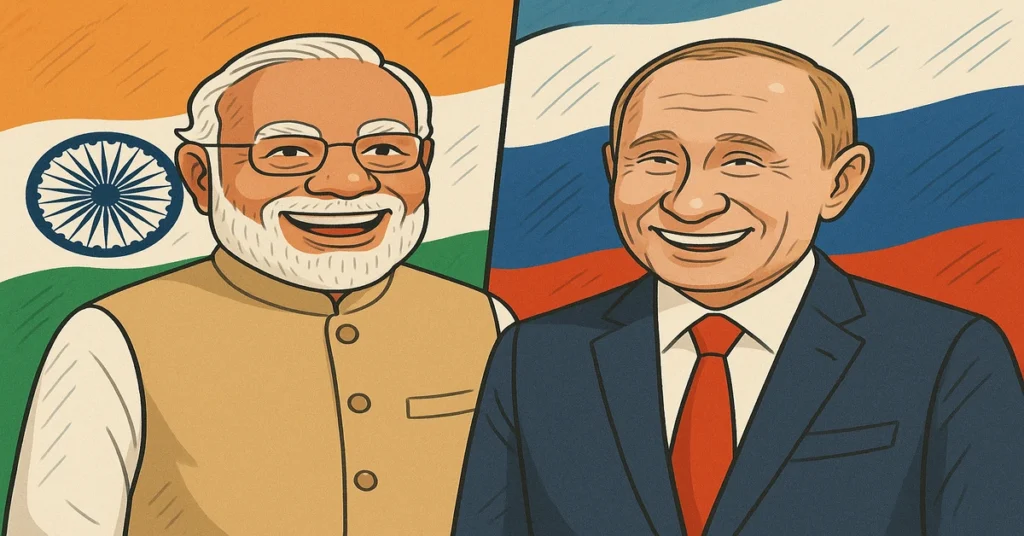
When Vladimir Putin’s plane touched down in New Delhi on December 4, 2025, Prime Minister Narendra Modi personally welcomed him on the tarmac with a warm embrace—a departure from standard protocol that signaled the significance of India–Russia relations 2025. The Russian president’s 30-hour visit marked his first trip to India since the full-scale invasion of Ukraine in 2022, and the ceremonial warmth was impossible to miss. Streets across the capital were lined with billboards welcoming Putin, and Russian and Indian flags flew side by side along Kartavya Path.
But behind the diplomatic theater and carefully choreographed photo opportunities, Putin’s visit comes at a time of strain on the bilateral relationship, with New Delhi under growing pressure from the West to downgrade relations with Moscow. The 23rd India–Russia Annual Summit promised to strengthen strategic, defense, and economic cooperation—yet it also exposed fundamental vulnerabilities that could reshape this decades-old partnership in troubling ways.
The $100 Billion Trade Dream: Ambition Meets Reality
The centerpiece announcement from Putin’s India visit was the launch of the India–Russia Economic Cooperation Programme 2030, targeting $100 billion in bilateral trade by the end of the decade. Prime Minister Modi expressed confidence that India and Russia could meet this target well before 2030, citing trust and scope for cooperation in electric vehicles, healthcare, and automotive components.
On paper, it sounds impressive. India-Russia trade has undergone significant growth, rising from just under $10 billion before the pandemic to almost $70 billion this year. But here’s the uncomfortable truth: this explosive growth is almost entirely due to one factor—India’s massive purchases of discounted Russian crude oil.
The Oil Dependency Trap
India became the second-largest buyer of Russian crude after Moscow invaded Ukraine in 2022, with imports increasing by a staggering 2,250 percent as Russia’s share in its imports went from 1 percent to 40 percent. While this provided India with energy security at bargain prices during a global crisis, it created a lopsided trade relationship that neither country has successfully addressed.
The numbers tell the story: In 2024–25, India exported goods worth just $4.88 billion to Russia, while imports stood at $63.81 billion. That’s a trade deficit of nearly $59 billion—and growing. Despite Putin stressing that Russian companies are prepared to increase purchases from India, the summit produced only vague commitments to “import more,” with no concrete action plan for genuine diversification.
The Payment Problem That Won’t Go Away
Perhaps the most glaring failure of Putin’s 2025 India visit was the inability to resolve the rupee–rouble settlement crisis that has plagued bilateral trade for years. This isn’t a new problem—it’s been festering since 2022.
Why Currency Settlements Keep Failing
The issue is straightforward but stubborn: Russia earns massive amounts of rupees from selling oil to India, but it has limited options for spending those rupees. Putin acknowledged that the trade imbalance complicates rupee-based settlement, noting that while India needs Russian oil and fertilizers, the challenge lies in what Russian companies can purchase with these rupees.
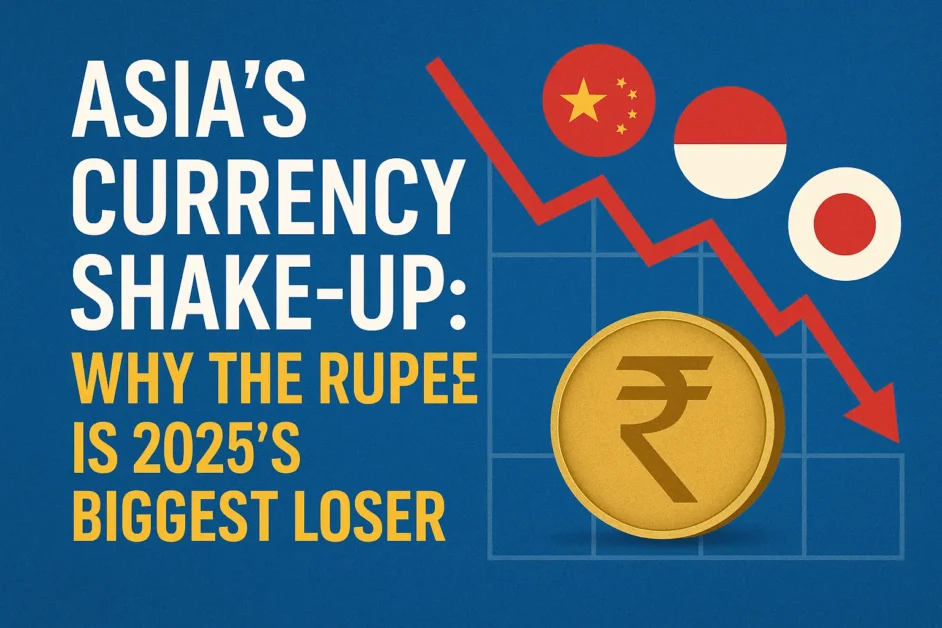
Russia was understandably wary of accumulating tens of billions in a currency with limited international convertibility. The rupee accounts for a daily average share of just 1.6% in the global foreign exchange market, while India’s share of global goods trade is 2%—hardly an attractive reserve currency for Moscow.
While over 90 percent of Russia-India trade payments are now conducted using rupees and roubles, significant challenges remain around exchange rate volatility, convertibility restrictions, and what Russia can actually do with its accumulated rupee balances. Indian exporters continue facing payment delays and uncertainty, undermining the very trade expansion both countries claim to want.
Energy Security or Strategic Vulnerability?
Putin’s assurance of “uninterrupted” energy supplies was framed as reinforcing India’s energy security. The reality is more complicated. Russia indeed signaled expanded cooperation in crude oil, petroleum products, and potential LNG supplies—but this deepening energy dependence comes with serious strings attached.
The Sanctions Shadow
New Delhi is negotiating a trade deal with Washington after being slapped with 50% tariffs, half of which was direct punishment for New Delhi’s continued purchases of discounted Russian oil. The Trump administration has been ramping up pressure on India to reduce Russian crude purchases, and in October 2025, Trump announced US sanctions on two of Russia’s largest oil companies.
The impact was immediate. Trade and refining sources told Reuters that India’s December oil imports are set to hit their lowest in at least three years. India recently made gestures to appease Washington, cutting Russian oil purchases and agreeing to buy 2.2 million metric tons of liquefied petroleum gas from the US.
This places India in an uncomfortable position: exposed to secondary sanctions, vulnerable to price cap mechanisms, facing rising freight and insurance uncertainties, and bearing reputational costs in Western capitals.
Nuclear Ties: Strength or Constraint?
Cooperation at the Kudankulam Nuclear Power Project continues to be a cornerstone of India–Russia relations 2025. Russia is participating in India’s largest nuclear power project, with discussions underway to expand collaboration to other areas such as the development of small modular reactors.
While beneficial for capacity expansion, this heavy reliance on Russian nuclear technology narrows India’s options. By doubling down on a nuclear partner under Western scrutiny, India risks limiting its technological diversity in one of its most strategic sectors—at a time when Western and East Asian suppliers could offer alternative pathways.
Defence Partnership: Stabilizing Legacy, Not Building the Future
The defence relationship was a notable absence in Putin’s visit. Despite expectations, India has not placed any major defence orders from Russia since the start of the Ukraine war. There were no announcements on the much-speculated Su-57 fighter acquisitions. This silence speaks volumes about Russia’s reduced capacity to deliver next-generation systems.
The Erosion of Russian Primacy
Russia remains India’s largest defence supplier, accounting for roughly 36 percent of arms imports, and more than 60 percent of India’s existing arsenal. But those numbers are declining. Import percentages have dropped from 72 percent in 2010 as India boosts domestic production and diversifies to US and European suppliers.
As Moscow has prioritized its own defense needs, India faced delays in the delivery of several platforms such as the S-400 air defense system and spare parts. The agreements that did emerge—local manufacturing of spare parts, technology-transfer commitments, and shipbuilding cooperation—stabilize legacy platforms but don’t redefine the future.
Meanwhile, India’s parallel deepening of defence ties with the United States, France, Israel, and Japan is steadily eroding Russia’s long-held primacy in India’s defense ecosystem.
The Geopolitical Tightrope Gets Narrower
India’s hosting of Putin during the Ukraine war allowed New Delhi to signal strategic autonomy and resist Western pressure. But the trip comes at a tense time for Modi, as New Delhi is simultaneously attempting to maintain a deep strategic relationship with the United States.
The Western Perception Gap
India’s Western partners remain wary of New Delhi’s engagement with Moscow. The joint statement’s call for a negotiated settlement in Ukraine—without any concrete Indian mediation role—underscored New Delhi’s limited leverage over Russia’s war calculus.
In rolling out the red carpet for Putin, New Delhi is signaling to both the West and China that it has options, showing Beijing and Washington that Delhi has a third option and gives it a bit more bargaining room. This diplomatic hedging strategy makes sense in theory, but the practical costs are mounting.
The perception gap has widened, complicating India’s diplomatic bandwidth in forums like the Quad, AUKUS discussions, and Indo-Pacific security cooperation. Every high-profile embrace of Putin generates headlines that undermine India’s carefully cultivated image as a responsible stakeholder in the rules-based international order.
What the Numbers Really Show
Let’s cut through the rhetoric and look at what India gained from Putin’s 2025 visit:
Trade: A $100 billion target with no clear roadmap to fix the massive imbalance. Indian exports remain stagnant while Russian oil dominates imports.
Payments: Rupee–rouble settlement problems persist despite years of negotiations. No breakthrough mechanism was announced.
Energy: Commitments to continued oil supplies—but under growing sanctions pressure that puts India at risk of secondary sanctions.
Defence: No major new acquisitions. Only incremental agreements to maintain existing Russian-origin platforms.
Nuclear: Expansion plans announced, but at the cost of technological diversity.
Geopolitics: India signals autonomy, but faces increasing friction with Western partners.
The Hidden Cost of Entanglement
Here’s the uncomfortable question India must confront: Is this partnership getting stronger, or is India simply getting more entangled with a capacity-constrained, sanctions-burdened partner?
The Economic Cooperation Programme 2030 and various MoUs on urea production, shipbuilding, and critical minerals deepen India’s dependence on Russian supply chains at precisely the moment when Moscow itself struggles to access Western technology and finance. These aren’t just commercial relationships—they’re potential vulnerability points.
India walks away from Putin’s visit with discounted energy and incremental industrial cooperation. But it also inherits greater exposure to a partner facing:
- Declining industrial capacity due to war mobilization
- Increasing international isolation
- Shrinking technological access
- Mounting sanctions pressure
- Uncertain long-term economic prospects
The People-to-People Mirage
New MoUs on labor mobility, temporary employment, and training of Indian seafarers for Arctic operations were framed as forward-looking cooperation. The two sides are expected to sign agreements on trade, health, agriculture, and cultural exchange during the visit.
But sending Indian workers to a sanctions-stricken Russian economy raises concerns about legal and financial protections, worker safety, and long-term prospects. These agreements add diplomatic goodwill but don’t shift the partnership’s core risk-reward structure.
The Path Forward: Realism Over Rhetoric
India–Russia relations 2025 stand at a crossroads. The partnership isn’t collapsing—it’s evolving in ways that create new dependencies while failing to resolve old problems. Putin’s December visit strengthened some economic and energy linkages, but it exposed fundamental vulnerabilities that rhetoric can’t paper over.
For India, the challenge is managing a complex balancing act: maintaining a historically important relationship while recognizing its limitations and risks. The trade imbalance persists. Payment systems remain broken. Energy and nuclear ties deepen dependence. Defence cooperation stabilizes rather than evolves. And geopolitical balancing becomes costlier by the day.
The question isn’t whether India should maintain ties with Russia—it clearly will. The question is whether India is being strategic or simply reactive. Are policymakers in New Delhi honestly assessing the long-term costs of this entanglement? Or are they prioritizing short-term gains like discounted oil while accumulating strategic liabilities?
Putin’s 2025 India visit produced headlines and photo opportunities. But beneath the surface, it revealed a partnership that’s deepening in some ways while becoming more fragile in others. India has chosen to maintain this relationship despite Western pressure—a defensible position grounded in strategic autonomy. But autonomy means making clear-eyed choices, not just avoiding difficult decisions.
The India–Russia partnership of 2025 is stronger in transaction volume but weaker in structural resilience. It’s a relationship increasingly defined by what India buys from Russia, not what both countries build together. And that’s a vulnerability disguised as a partnership—one that could constrain India’s options precisely when it needs maximum flexibility in a turbulent world.