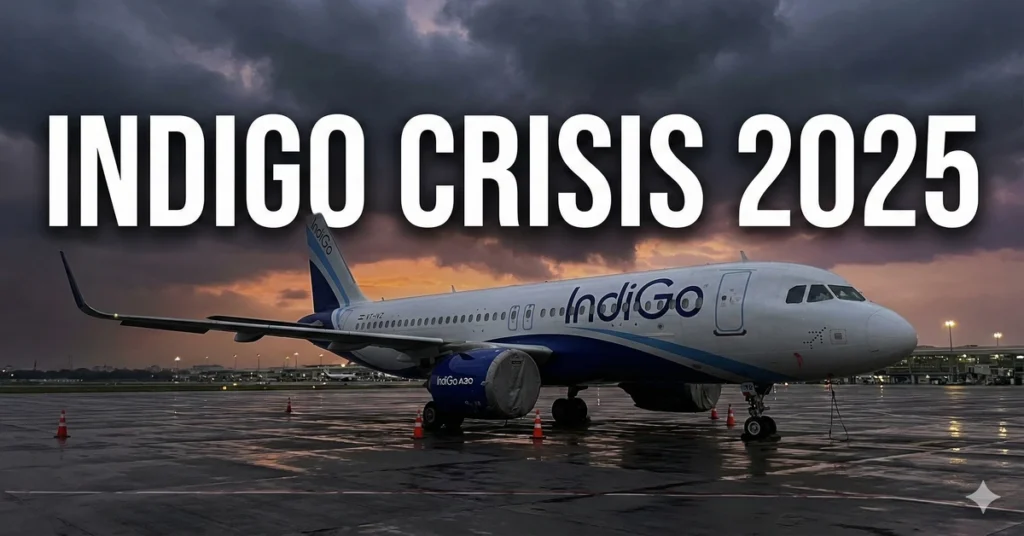
If you’ve been following Indian aviation news this December, you’ve probably heard about the IndiGo crisis 2025 — and if you’re one of the thousands who got stranded at an airport, you’ve lived through it. What started as a few cancelled flights quickly spiraled into India’s worst aviation nightmare in recent memory, leaving passengers furious, the government scrambling, and serious questions hanging in the air about how we got here.
Let me walk you through what actually happened, why it matters, and what needs to change so we never see this kind of chaos again.
The Scale of the Disaster: When India’s Largest Airline Came Crashing Down
Picture this: December 5, 2025. You’re at Delhi’s Indira Gandhi International Airport, boarding pass in hand, excited about your trip. Then the announcement comes — your IndiGo flight is cancelled. You look around and realize you’re not alone. Hundreds, then thousands of passengers are stuck in the same nightmare.
That single day, IndiGo — the airline that carries nearly half of all domestic passengers in India — cancelled over 1,000 flights. Yes, you read that right. One thousand flights in a single day.
Major airports across Delhi, Mumbai, Bengaluru, Hyderabad, and Chennai turned into scenes of frustration and despair. Passengers slept on airport floors, desperate parents tried to calm crying children, business travelers missed crucial meetings, and families saw their holiday plans crumble.
Even by December 7, when things were supposedly “improving,” the airline was still cancelling around 650 flights daily. For an airline that prides itself on reliability and efficiency, this wasn’t just a hiccup — it was a complete operational meltdown.
Understanding the IndiGo Crisis 2025: What Actually Caused This Mess?
The FDTL Rules: A Safety Measure That Backfired
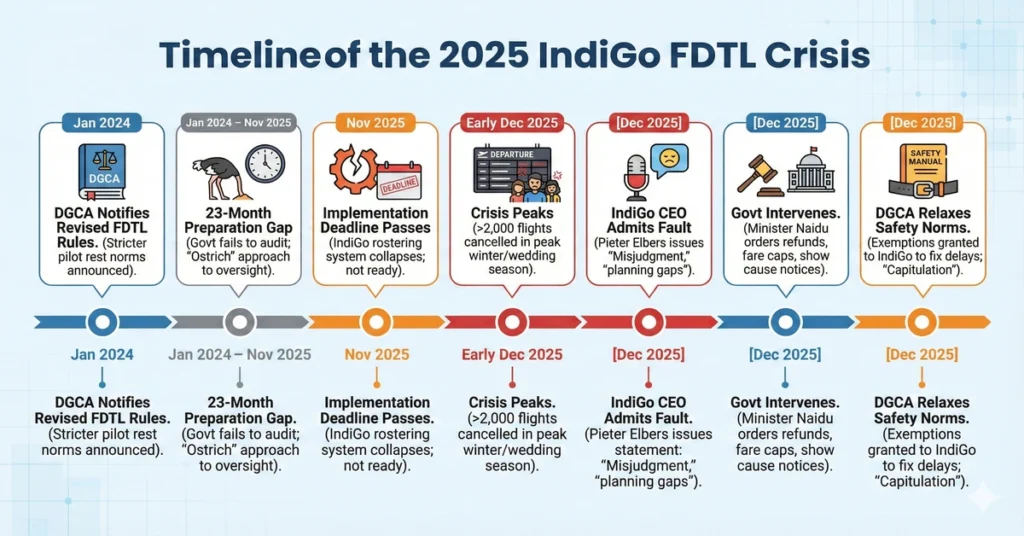
At the heart of the IndiGo crisis 2025 lies something that sounds boring but proved catastrophic: Flight Duty Time Limitation (FDTL) rules. These new regulations were introduced to protect pilots from burnout and fatigue — genuinely noble goals. The rules mandated longer rest periods for pilots, limited the number of night landings they could perform, and prevented personal leave from being counted as rest time.
On paper, these changes make perfect sense. Tired pilots are dangerous. We all want well-rested crew members when we’re 35,000 feet in the air.
But here’s where things went sideways: IndiGo had been running on what industry insiders call a “lean-staffing model” for years. Basically, they kept just enough pilots to cover flights with minimal buffer. When the new FDTL rules kicked in, requiring more rest time and stricter scheduling, the airline suddenly didn’t have enough pilots to go around.
Instead of adapting smoothly, IndiGo’s crew-planning systems buckled under pressure. Rosters couldn’t be adjusted in time. Pilots hit their duty-time limits. Flights had no one to fly them. And the cancellations began cascading like dominoes.
The Perfect Storm of Problems
But FDTL wasn’t the only culprit. IndiGo also blamed what they vaguely called “unforeseen operational challenges” — a corporate way of saying “everything went wrong at once.”
December is peak travel season in India. Schools are on winter break, offices are winding down, and everyone wants to travel. Airport congestion was already high. Add to that some technical glitches in their systems and patches of adverse weather, and you’ve got the perfect recipe for disaster.
Some aviation experts aren’t buying the “unforeseen” excuse, though. They argue this was entirely predictable — the inevitable result of years of cutting corners on manpower planning to maximize profits. When you operate with razor-thin margins and zero buffer, even a small disruption can trigger a complete collapse.
How the Government and IndiGo Responded to the Crisis
The Government Finally Steps In
Facing an avalanche of angry passengers and horrific PR, both the government and IndiGo were forced into damage-control mode.
The Directorate General of Civil Aviation (DGCA) and the Ministry of Civil Aviation issued directives that passengers must receive full refunds for cancelled flights, with pending refunds to be cleared by that Sunday evening. They also mandated no rescheduling fees, gave passengers a 48-hour window to reunite with their luggage, and ordered the airline to set up 24×7 control rooms and passenger-support cells.
Here’s where it gets interesting: alternative airlines started jacking up their fares, seeing an opportunity to profit from IndiGo’s misfortune. A route that normally cost ₹5,000 suddenly jumped to ₹15,000 or more. The government responded by reimposing airfare caps — something we hadn’t seen since the COVID-19 pandemic.
DGCA didn’t stop there. They issued a show-cause notice to IndiGo’s top executives, including the CEO, essentially asking: “Why shouldn’t we take enforcement action against you?”
IndiGo’s Damage Control
For its part, IndiGo’s Board quickly established a Crisis Management Group to monitor the situation and guide recovery efforts. The airline promised a thorough “root-cause analysis” and pledged to achieve full network normalization by December 10.
The numbers tell part of the recovery story: according to the civil aviation ministry, IndiGo has refunded approximately ₹610 crore to affected passengers so far. That’s a staggering amount of money — and a clear indicator of just how massive this disruption was.
Where the Government Failed: Missed Warning Signs and Reactive Responses
The IndiGo Crisis 2025 Exposed Serious Regulatory Gaps
While it’s easy to blame IndiGo — and they certainly deserve their share of criticism — the government’s role in this fiasco can’t be ignored.
First, the lack of oversight was glaring. The FDTL rules weren’t introduced overnight; they’d been in the works for months. Any regulator worth their salt should have anticipated that India’s largest airline, operating at massive scale, might face manpower challenges. But there was no mandatory buffer requirement, no staffing mandate, no “if-then” contingency planning.
Second, the government’s intervention on airfare gouging came too late. Fares skyrocketed within hours of the first cancellations, but the fare caps were imposed only after prices had already “defied gravity.” By then, thousands of passengers had already been forced to pay exorbitant prices or cancel their trips entirely.
Third — and perhaps most troubling — the government eventually suspended some FDTL norms specifically for IndiGo. This raised serious questions about fairness and safety standards. If these rules are important for pilot safety, why suspend them for one airline? If they can be suspended, were they necessary in the first place?
The real systemic failure here: India allowed one airline to carry roughly half of all domestic passengers without ensuring it had the structural resilience to handle operational stress or regulatory changes.
Lessons Learned: How to Prevent Another Aviation Meltdown
What Must Change to Avoid a Repeat of the IndiGo Crisis 2025
If we want to prevent this kind of chaos from happening again, some serious changes need to happen — on both the airline and regulatory sides.
Mandatory Buffer Staffing: Large carriers should be required by law to maintain standby crew — pilots and cabin crew — especially when new duty-time regulations are being introduced. Running at 100% capacity with zero buffer is a recipe for disaster.
Phased Rollouts with Real-World Testing: Before implementing major rule changes, airlines should run stress-test simulations under peak-season conditions, supervised by regulators. This would help identify problems before they strand thousands of passengers.
Industry-Wide Standards, Not Special Exceptions: Emergency relaxations of safety rules should never be airline-specific. If safety regulations need to be suspended, it should be across the entire industry — or better yet, the regulations should be designed properly from the start so suspensions aren’t necessary.
Transparent Contingency Planning: Airlines should have a public “passenger protection charter” that clearly outlines compensation, assistance, refunds, rerouting, and accommodation policies before any large-scale disruptions occur. Passengers shouldn’t have to fight for basic rights during a crisis.
Breaking Up the Monopoly: The government needs to encourage genuine competition and capacity growth among other carriers. Having one airline dominate the market to this extent creates a single point of failure for India’s entire aviation system.
Pre-Authorized Fare Controls: Fare-capping mechanisms should automatically kick in when major disruptions occur, preventing opportunistic price gouging before it starts.
The Bigger Picture: Trust Takes Years to Build, Seconds to Destroy
The IndiGo crisis 2025 wasn’t just a corporate stumble or a regulatory oversight. It was a wake-up call for India’s aviation sector.
As operations slowly return to normal, with over ₹610 crore refunded and a regulatory inquiry underway, the real question is whether anyone will actually learn from this. Would IndiGo restructure its lean-staffing model? Will the government strengthen oversight and build in better safeguards? Will we see meaningful reforms, or just temporary band-aids?
India’s aviation market is only going to grow. More people are flying than ever before, and that trend isn’t reversing. But growth without resilience is a house of cards waiting to collapse.
For the thousands of passengers who missed weddings, business deals, family gatherings, and once-in-a-lifetime trips, this crisis was deeply personal. Many have said they’ll think twice before booking IndiGo again. And that loss of trust — that damaged relationship between airline and passenger — takes years to rebuild.
The IndiGo crisis 2025 showed us that India’s aviation infrastructure, despite its impressive growth, remains fragile. It revealed that profit margins sometimes come before passenger protection, and that our regulatory frameworks aren’t robust enough to handle the system they’re supposed to oversee.
Let’s hope this painful lesson leads to real change. Because the next time the system breaks down, we might not get off so easily.
Have you been affected by the IndiGo flight cancellations? Share your experience in the comments below.