![Trump and EU [AI Image]](https://gurusadda.com/wp-content/uploads/2025/07/Trump-and-EU.webp)
Executive Summary
The European Union’s response to the Trump administration’s aggressive tariffs demonstrated a sophisticated diplomatic strategy over immediate retaliation. Through measured negotiations, the EU secured a baseline 15% Europe Trump tariffs agreement, significantly lower than threatened rates of 30-50%, while preserving critical transatlantic relationships and avoiding economic catastrophe.
The Diplomatic Foundation: Europe Trump Tariffs Response Strategy
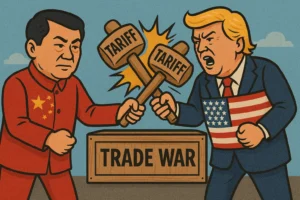
When the Trump administration initiated its comprehensive tariff offensive targeting both allies and competitors, the European Union faced a critical strategic decision regarding Europe’s Trump tariffs. Rather than engaging in immediate reciprocal measures, EU leadership prioritized diplomatic engagement, maintaining negotiation channels despite escalating threats of Trump tariffs reaching 50% on European goods.
This approach reflected the EU’s institutional commitment to multilateral solutions and economic stability. Brussels maintained that proportionate countermeasures remained available while consistently emphasizing preference for negotiated resolutions.
The Breakthrough Agreement: Europe Trump Tariffs July 2025 Accord
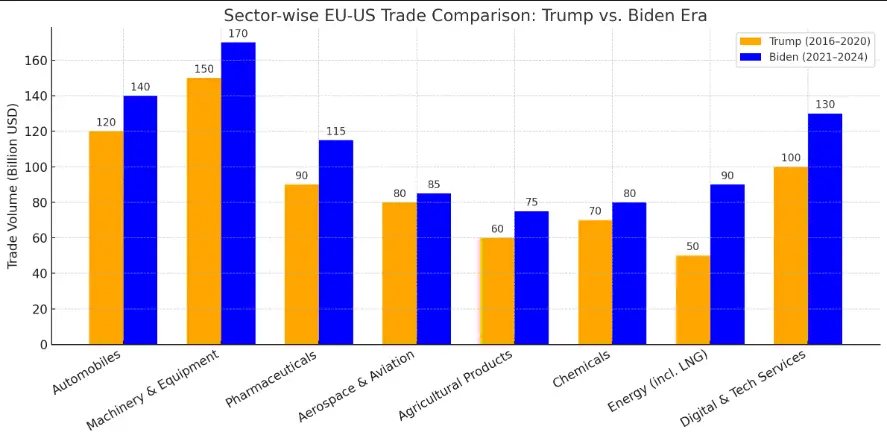
Following extensive bilateral negotiations, the United States and European Union reached a comprehensive trade agreement in late July 2025. The accord established a baseline 15% Europe Trump tariffs rate for most European goods entering the American market—a substantial increase from the pre-administration average of 4.8%, yet significantly below the projected worst-case scenarios of 30-50%.
Key Agreement Components:
Sector-Specific Exemptions: The agreement included strategic exemptions for critical industries, including medical devices, chemicals, and the aviation sectors, providing essential relief for both economies.
Graduated Implementation: The tariff structure incorporated phased implementation mechanisms to minimize immediate economic disruption.
Strategic Concessions: Europe Trump Tariffs Calculated Trade-offs
The EU’s negotiating success required substantial concessions across multiple economic sectors to resolve the Europe Trump tariffs dispute:
Energy and Defense Procurement
- Increased commitments to U.S. liquefied natural gas (LNG) purchases
- Enhanced procurement of American military equipment and defense technologies
Investment and Market Access
- Expanded European investment commitments in the U.S. economy
- Reduced non-tariff barriers, facilitating American firms’ EU market access
- Automotive sector concessions benefiting U.S. manufacturers while protecting German automakers
Internal EU Dynamics: Managing Divergent National Interests
The negotiation process revealed significant internal tensions within the European Union. Member states demonstrated varying risk tolerances and economic priorities:
Hawkish Position: France and Spain advocated for immediate retaliatory measures, emphasizing the importance of demonstrating EU strength and unity.
Pragmatic Approach: Germany and Italy, with substantial export dependencies particularly in the automotive sectors, advocated for cautious diplomatic engagement.
The eventual consensus reflected pragmatic assessment, prioritizing economic stability and transatlantic cooperation over confrontational posturing.
Legal Framework and WTO Compliance
While pursuing diplomatic solutions, the EU maintained a robust legal positioning. Brussels prepared comprehensive countermeasures valued at €93 billion, legally grounded in World Trade Organization (WTO) frameworks. Simultaneously, the EU initiated formal WTO dispute proceedings challenging the legality of U.S. tariff implementations.
This dual-track approach demonstrated European commitment to rules-based international trade while maintaining negotiation flexibility.
Economic Impact Assessment of Europe Trump Tariffs
Positive Outcomes:
- German automotive sector protection from higher European Trump tariffs rates
- Market stability preservation through negotiated certainty
- Maintained transatlantic cooperation on global security issues, including Ukraine
Negative Consequences:
- Elevated baseline Europe Trump tariffs impacting EU exporters
- Consumer price increases across European markets
- Long-term structural adjustments in trade relationships
Strategic Analysis: Long-term Implications
The agreement represents Europe’s prioritization of strategic stability over short-term economic optimization. While the United States achieved significant concessions without facing comprehensive retaliation, the EU preserved critical supply chains and maintained essential cooperation frameworks.
The outcome demonstrates institutional resilience and the EU’s capacity for a unified response despite internal divisions. However, it also establishes precedent for future trade negotiations and transatlantic economic relationships.
Conclusion
The European Union’s management of Trump-era US trade tariff challenges exemplifies sophisticated diplomatic strategy under pressure. By prioritizing negotiation over escalation, the EU avoided potentially catastrophic economic disruption while maintaining long-term strategic relationships. Though requiring substantial concessions, the approach preserved European unity and demonstrated the value of multilateral diplomatic engagement in resolving complex Europe Trump tariffs disputes.
Frequently Asked Questions (FAQ)
1. What was the final tariff rate agreed upon between the US and EU?
The July 2025 agreement established a baseline 15% tariff rate for most European goods entering the American market, significantly lower than the threatened 30-50% rates but higher than the previous 4.8% average.
2. Which sectors received exemptions from the new tariff structure?
The agreement included strategic exemptions for medical devices, chemicals, and aviation sectors, providing essential relief for critical industries in both economies.
3. How much were the EU’s prepared countermeasures worth?
The European Union prepared comprehensive countermeasures valued at €93 billion, legally grounded in WTO frameworks, though these were held in reserve during negotiations.
4. What concessions did Europe make to secure the agreement?
Key EU concessions included increased purchases of U.S. LNG and military equipment, expanded European investment in America, reduced non-tariff barriers for U.S. firms, and automotive sector concessions.
5. Did the EU take any legal action regarding the tariffs?
Yes, while pursuing diplomatic solutions, the EU simultaneously filed formal WTO dispute proceedings challenging the legality of U.S. tariff implementations.
Discussion Questions for Readers
1. Trade Strategy Assessment
Do you believe the EU’s diplomatic approach was more effective than immediate retaliation would have been? What alternative strategies could have yielded better outcomes?
2. Economic Impact Analysis
How do you assess the trade-offs between short-term economic costs and long-term strategic stability in the EU’s decision-making process?
3. Internal EU Dynamics
What does this case reveal about the challenges of maintaining unity among EU member states with divergent economic interests during international crises?
4. Future Implications
How might this precedent influence future U.S.-EU trade negotiations and Europe’s approach to economic diplomacy with other major powers?
5. Global Trade Governance
What does this episode suggest about the effectiveness of current international trade governance mechanisms, particularly the WTO system?


![Economic Batton Race [AI Symbolic]](https://gurusadda.com/wp-content/uploads/2025/08/Economic-Batton-Race-AI-Symbolic-3-2-300x200.webp)