Introduction
The global economy stands at a crossroads. While oil dominated the 20th century, the 21st century belongs to a different class of resources altogether: critical minerals for industries. These are the raw materials powering everything from electric vehicles to fighter jets, from wind turbines to smartphones.
Unlike conventional commodities, critical minerals combine two characteristics that make them uniquely important. First, they are essential inputs for strategic industries with no easy substitutes. Second, their supply chains are concentrated in just a handful of countries, creating vulnerabilities that nations can no longer ignore.
As the world races toward decarbonization, digitalization, and technological supremacy, access to these minerals has become a question of economic competitiveness and national security. Understanding this shift is no longer optional for policymakers, business leaders, or informed citizens.
What Are Critical Minerals?
Critical minerals are naturally occurring substances that are economically and strategically important to a nation’s economy but face supply chain risks. Governments typically classify minerals as “critical” based on two criteria: their importance to essential functions and the risk of supply disruption.
The United States Geological Survey, the European Commission, and other national agencies maintain lists that change over time. These lists reflect evolving technological needs and geopolitical realities. For instance, the U.S. critical minerals list includes 50 commodities, while the European Union identifies 34.
Traditional resources like iron ore or coal are abundant and geographically dispersed. Critical minerals, by contrast, often exist in limited deposits and require complex processing. Moreover, extraction and refining are concentrated in specific countries, making supply chains inherently fragile.
This concentration isn’t accidental. It reflects decades of investment, technological specialization, and sometimes deliberate strategic positioning by producing nations.
| Classification Criteria | Description |
|---|---|
| Economic Importance | Essential for key industries with limited substitutes |
| Supply Risk | Concentrated production or vulnerable supply chains |
| Strategic Value | Critical for national security and defense applications |
| Processing Complexity | Requires specialized refining and manufacturing capabilities |
Why Critical Minerals Matter in the 21st Century
Three transformative forces are driving unprecedented demand for critical minerals for industries across the global economy.
The clean energy transition stands at the forefront. Meeting climate targets requires massive deployment of solar panels, wind turbines, and battery storage systems. An electric vehicle battery requires six times more minerals than a conventional car. A single offshore wind farm demands enormous quantities of rare earth elements for its permanent magnets.
Simultaneously, the digital revolution continues accelerating. Data centers, 5G networks, artificial intelligence systems, and semiconductor manufacturing all depend on specialty minerals. As computing power grows exponentially, so does the need for materials that can handle extreme miniaturization and heat dissipation.
Defense and aerospace applications add another layer of strategic importance. Modern weapons systems, satellites, stealth technology, and precision-guided munitions require materials with exceptional properties. No nation can maintain military readiness without secure access to these inputs.
These three trends are not temporary. They represent structural shifts that will define industrial competition for decades.
| Industry Sector | Key Applications | Primary Critical Minerals Required |
|---|---|---|
| Clean Energy | EV batteries, wind turbines, solar panels | Lithium, cobalt, rare earths, silicon, copper |
| Digital Technology | Semiconductors, data centers, 5G infrastructure | Silicon, rare earths, gallium, germanium |
| Defense & Aerospace | Weapons systems, satellites, stealth technology | Rare earths, titanium, beryllium, antimony |
| Advanced Manufacturing | Robotics, precision equipment, catalysts | Platinum group metals, tungsten, vanadium |
Key Critical Minerals Powering Modern Industries
Lithium
Lithium has become synonymous with the battery revolution. This lightweight metal stores energy with exceptional efficiency, making it indispensable for rechargeable batteries in everything from phones to electric cars.
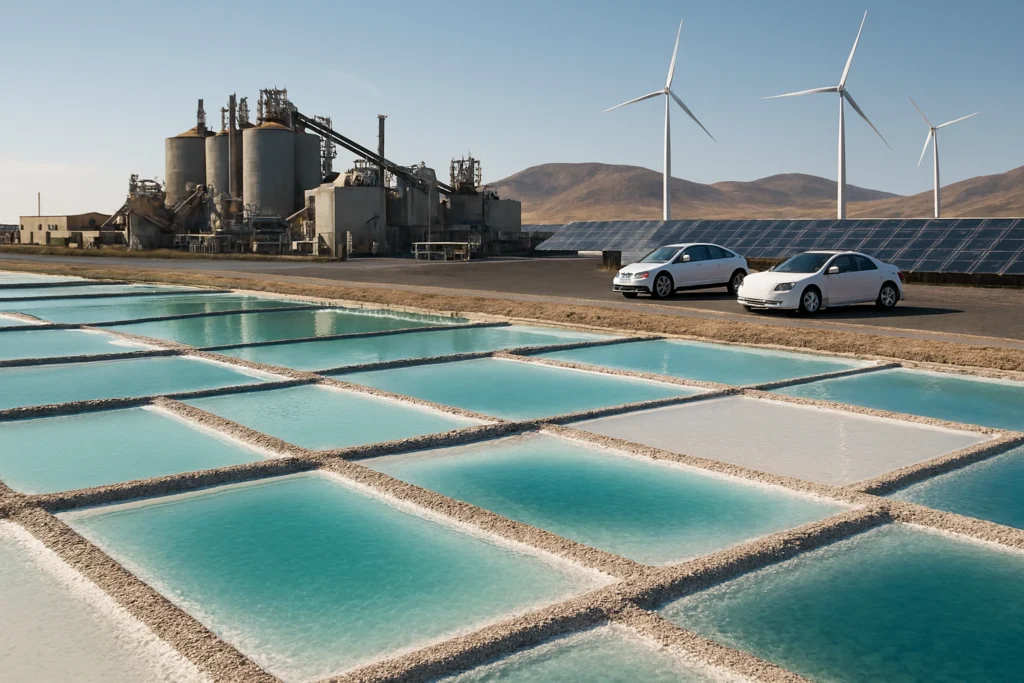
Global lithium demand is projected to increase more than twentyfold by 2040. Yet production is concentrated in Australia, Chile, and China, with China controlling most refining capacity. New mines take years to develop, and extraction processes face environmental scrutiny, particularly regarding water use in South American salt flats.
The strategic implications are clear: whoever controls lithium refining shapes the pace of electrification worldwide.
Cobalt
Cobalt enhances battery stability and energy density. Despite efforts to reduce cobalt content in batteries, it remains crucial for high-performance applications.
The Democratic Republic of Congo produces approximately 70 percent of global cobalt supply. This concentration raises concerns beyond mere supply risk. Artisanal mining operations, sometimes involving child labor, have prompted ethical sourcing initiatives and transparency requirements.
Industrial buyers now face a dilemma: securing adequate supply while ensuring responsible sourcing. This tension will only intensify as demand grows.
Nickel
High-purity nickel is essential for cathodes in lithium-ion batteries and stainless steel production. The battery sector’s nickel demand is expected to surge as automakers shift to nickel-rich battery chemistries that reduce cobalt dependence.
Indonesia and the Philippines dominate production, but not all nickel is suitable for batteries. Refining lower-grade nickel to battery-grade quality requires significant processing capacity, creating bottlenecks that could constrain EV production.
Investment in refining infrastructure has become as important as mining expansion itself.
Rare Earth Elements
Despite their name, rare earth elements are relatively abundant. The challenge lies in extraction and separation. These seventeen elements enable permanent magnets in wind turbines and EV motors, catalysts in oil refining, and phosphors in displays.
China produces roughly 60 percent of rare earths and controls over 85 percent of processing capacity. This dominance emerged through decades of investment, lax environmental standards, and strategic planning. Western nations abandoned rare earth processing when it became economically challenging, a decision now viewed as a critical strategic error.
Rebuilding this capacity outside China will take years and billions in investment.
Copper
Copper is the workhorse of electrification. Its superior conductivity makes it irreplaceable in wiring, motors, and charging infrastructure. The energy transition will require vast quantities—some estimates suggest doubling global copper production by 2035.
Unlike some critical minerals, copper production is more geographically distributed, with Chile, Peru, China, and the United States as major producers. However, ore grades are declining, meaning more material must be processed to yield the same output. New discoveries are rare, and permitting timelines stretch for years.
The copper market will likely face sustained supply deficits, driving prices higher and potentially slowing the energy transition.
Graphite
Natural and synthetic graphite serve as the anode material in lithium-ion batteries. China dominates this market, producing 65 percent of natural graphite and over 95 percent of processed graphite for batteries.
Recent Chinese export restrictions on graphite processing technology have alarmed battery manufacturers globally. Building alternative supply chains requires not just new mines but also processing facilities that meet stringent quality standards for battery applications.
Silicon
While silicon is abundant, metallurgical-grade and especially polysilicon for semiconductors and solar panels require extreme purity. China has invested heavily in polysilicon production, now accounting for over 80 percent of global capacity.
This concentration poses risks for both the solar industry and semiconductor supply chains. The capital intensity and technical expertise required for high-purity silicon production create significant barriers to rapid capacity expansion elsewhere.
| Critical Mineral | Primary Uses | Top Producing Countries | Processing Concentration | Key Supply Risk |
|---|---|---|---|---|
| Lithium | EV batteries, energy storage | Australia, Chile, China | China (60% refining) | Refining bottlenecks |
| Cobalt | Battery cathodes, superalloys | DRC (70%), Russia, Australia | China (70% refining) | Geographic concentration, ethical concerns |
| Nickel | Battery cathodes, stainless steel | Indonesia, Philippines, Russia | China, Japan | Processing capacity for battery-grade |
| Rare Earths | Permanent magnets, catalysts | China (60%), USA, Myanmar | China (85%+) | Processing dominance |
| Copper | Electrical wiring, motors | Chile, Peru, China, USA | Distributed | Declining ore grades, permitting delays |
| Graphite | Battery anodes | China (65%), Mozambique | China (95%+ for batteries) | Export restrictions |
| Silicon | Semiconductors, solar panels | China, Norway, USA | China (80%+ polysilicon) | High-purity processing concentration |
Global Supply Chains and Geopolitical Risks
The geography of critical minerals creates asymmetric dependencies that reshape international relations. A handful of countries control resources that entire economies depend upon.
China has systematically positioned itself as the dominant force in critical mineral supply chains. Beyond mining, China has invested in processing and refining capacity that others abandoned or never developed. This vertical integration gives China leverage that extends far beyond its borders.
Resource nationalism is rising across producing nations. Governments increasingly view critical minerals as strategic assets to be controlled rather than mere exports. Indonesia banned nickel ore exports to force downstream processing domestically. Chile and Mexico are considering nationalizing lithium resources.
These moves reflect a fundamental shift in thinking. Countries with resources recognize their bargaining power and intend to capture more value from the critical mineral economy.
Strategic stockpiling has returned to policy discussions. The United States is rebuilding its national defense stockpile of critical minerals. Japan and South Korea maintain extensive reserves. The European Union is establishing stockpiling mechanisms.
Meanwhile, China’s Belt and Road Initiative has secured mining rights and infrastructure across Africa and Latin America, extending its influence over future supply.
| Geopolitical Risk Factor | Impact | Examples |
|---|---|---|
| Supply Concentration | Single-country dominance creates vulnerability | China: rare earths (85%), DRC: cobalt (70%) |
| Resource Nationalism | Export bans, forced local processing | Indonesia nickel export ban, lithium nationalization proposals |
| Trade Restrictions | Strategic export controls | Chinese graphite technology restrictions |
| Strategic Partnerships | Mineral access tied to geopolitical alignment | Belt and Road mining investments in Africa |
| Stockpiling | Market distortions, supply uncertainty | US, Japan, EU strategic reserves |
Critical Minerals and National Security
Defense technologies depend absolutely on critical minerals for industries ranging from aviation to communications. Rare earth magnets enable precision-guided weapons. Antimony goes into armor-piercing ammunition. Beryllium is essential for satellite systems and nuclear weapons.
The Pentagon has acknowledged vulnerabilities in defense supply chains. A 2022 assessment found that the United States imports 100 percent of its processed rare earths and relies on potential adversaries for numerous other critical inputs.
This dependence creates strategic vulnerabilities that could be exploited during conflict. Imagine a scenario where access to key materials is suddenly restricted. Weapons production could halt. Defense contractors could face critical shortages.
Industrial self-reliance has become a national security imperative. The United States, European Union, Japan, and other allies are investing in domestic mining, processing, and manufacturing capacity. These efforts aim to create resilient supply chains that can withstand geopolitical shocks.
However, reshoring takes time and capital. Building a rare earth processing facility requires years and billions of dollars. In the interim, dependencies remain acute.
| Defense Application | Critical Minerals Required | Strategic Vulnerability |
|---|---|---|
| Precision-Guided Weapons | Rare earths (neodymium, samarium) | 100% import dependence for processed materials |
| Fighter Jets & Aircraft | Titanium, beryllium, rhenium | Limited domestic processing capacity |
| Satellite Systems | Beryllium, gallium, germanium | Concentration in geopolitical competitors |
| Armor-Piercing Munitions | Antimony, tungsten | High import dependence |
| Electronic Warfare Systems | Gallium, indium, rare earths | Semiconductor supply chain risks |
| Nuclear Weapons Systems | Beryllium, lithium, uranium | Specialized processing requirements |
Environmental and Ethical Challenges
Mining critical minerals carries significant environmental costs. Extraction disrupts ecosystems, consumes vast quantities of water, and generates hazardous waste. Lithium brine operations in Chile’s Atacama Desert have been linked to water depletion affecting indigenous communities.
Rare earth processing produces radioactive waste and toxic byproducts. China’s historical willingness to accept these environmental costs partly explains its dominance. Western nations face stricter environmental regulations that increase costs and extend project timelines.
Labor and human rights concerns add ethical dimensions. Artisanal cobalt mining in Congo operates under conditions that would be illegal elsewhere. Calls for supply chain transparency have led to due diligence requirements, but enforcement remains challenging.
The irony is inescapable: the transition to clean energy depends on minerals extracted through processes that are often environmentally and socially problematic. Resolving this contradiction requires innovation, regulation, and genuine commitment to responsible sourcing.
Sustainability trade-offs are real. Society must balance the urgency of climate action against the local impacts of accelerated mining. There are no easy answers, only difficult choices that demand honest assessment and stakeholder engagement.
| Challenge Category | Specific Issues | Affected Regions | Mitigation Approaches |
|---|---|---|---|
| Environmental Impact | Water depletion, habitat destruction, toxic waste | Chile (lithium), China (rare earths), Indonesia (nickel) | Stricter regulations, cleaner extraction technologies |
| Labor Rights | Artisanal mining, unsafe conditions, child labor | DRC (cobalt), parts of Asia and Latin America | Supply chain audits, certification schemes |
| Community Displacement | Indigenous land rights, forced relocation | Multiple mining regions globally | Free prior informed consent, benefit-sharing agreements |
| Waste Management | Radioactive byproducts, chemical contamination | Rare earth processing sites | Advanced waste treatment, circular economy approaches |
| Carbon Footprint | Energy-intensive processing | Global processing hubs | Renewable energy integration, efficiency improvements |
Recycling, Substitution, and Innovation
Urban mining—recovering critical minerals from electronic waste—offers a partial solution. Millions of tons of discarded devices contain valuable materials. Current recycling rates are discouragingly low, often below 5 percent for many critical minerals.
Improving collection systems, developing more efficient recycling technologies, and designing products for easier disassembly could significantly boost secondary supply. However, recycling cannot meet the full demand surge ahead. It complements rather than replaces primary production.
The circular economy concept extends beyond recycling to include reuse, remanufacturing, and extended product lifespans. Battery second-life applications, where EV batteries serve as grid storage after automotive use, exemplify this approach.
Technological substitution offers another pathway. Researchers are developing sodium-ion batteries that could reduce lithium dependence. Cobalt-free battery chemistries are advancing. Permanent magnet motors without rare earths are being tested.
However, substitution faces technical and economic hurdles. Alternative materials may offer lower performance or higher costs. Scaling new technologies from laboratory to mass production takes years of investment and refinement.
Innovation in extraction and processing technologies could unlock resources previously considered uneconomical. Direct lithium extraction methods could tap new sources with lower environmental impact. Improved separation techniques might make rare earth processing viable in more locations.
Research and development funding must increase substantially. Both public and private investment are essential to accelerate the timeline for breakthrough innovations.
| Strategy | Current Status | Potential Impact | Timeline to Scale | Key Challenges |
|---|---|---|---|---|
| E-Waste Recycling | <5% recovery rate for most critical minerals | Could provide 10-15% of supply by 2040 | 5-10 years | Collection infrastructure, economic viability |
| Battery Recycling | Emerging commercial operations | Could recover 20-30% of battery materials | 3-7 years | Technology efficiency, logistics |
| Material Substitution | Lab stage to early commercialization | Variable by mineral (high for cobalt, low for rare earths) | 5-15 years | Performance gaps, cost competitiveness |
| Advanced Extraction | Pilot projects underway | Could unlock 20-40% more economical reserves | 7-12 years | Capital requirements, technical validation |
| Circular Design | Growing adoption | Extend product life, ease recycling | 3-10 years | Industry standardization, consumer behavior |
India and the Critical Minerals Race
India’s ambitions in clean energy, electric mobility, and digital infrastructure create massive critical mineral needs. The country aims to install 500 gigawatts of renewable energy capacity by 2030 and achieve significant EV penetration. These goals are impossible without secure mineral supplies.
Currently, India imports nearly all its lithium, cobalt, and rare earths. This dependence exposes India to supply disruptions and price volatility that could derail its industrial and climate objectives.
Recognition of this vulnerability has prompted action. The Indian government identified 30 critical minerals in 2023 and is developing a comprehensive strategy. Key elements include exploring domestic resources, acquiring mining assets abroad, developing recycling capacity, and forming international partnerships.
Exploration efforts have intensified in regions with potential lithium and rare earth deposits. However, developing domestic production from discovery to operation typically requires a decade or more.
International partnerships offer faster results. India has signed agreements with Australia, Argentina, and African nations to secure mining rights and offtake agreements. Collaboration with the United States, Japan, and Australia through initiatives like the Quad includes critical mineral supply chain cooperation.
Building domestic processing and refining capacity represents another priority. India has metallurgical expertise and a growing manufacturing sector that could support vertical integration in critical mineral supply chains.
The challenge is substantial, but India’s size, technical capabilities, and strategic position make it a potential major player in reshaping critical mineral markets.
| India’s Critical Mineral Strategy | Current Status | Key Initiatives | Partnerships |
|---|---|---|---|
| Domestic Exploration | Early stage, limited known reserves | Survey of India mapping, private sector exploration | Domestic geological agencies |
| Overseas Acquisitions | Active pursuit of mining assets | Khanij Bidesh India Ltd investments | Argentina (lithium), Australia (multiple minerals) |
| Processing Capacity | Limited, mostly imports | Build domestic refining facilities | Technology transfer agreements |
| Recycling Infrastructure | Nascent stage | E-waste and battery recycling policies | Private sector partnerships |
| International Cooperation | Expanding partnerships | Quad Critical Minerals Initiative | USA, Japan, Australia, African nations |
| Target Goals | 500 GW renewables by 2030, EV adoption | Reduce import dependence by 30-40% | Multiple bilateral agreements |
The Road Ahead: Future Outlook
Demand projections are staggering. The International Energy Agency estimates that achieving climate goals will require six times more mineral inputs by 2040 compared to current levels. Electric vehicles and battery storage account for the largest share of increased demand.
Supply bottlenecks appear likely. The gap between projected demand and planned supply capacity is widening for several key minerals. New mining projects face lengthy permitting processes, community opposition, and financing challenges. The risk of significant shortages in the late 2020s and 2030s is real.
Price volatility will intensify. As markets tighten, critical mineral prices could spike, increasing costs for clean energy and digital technologies. This could slow adoption rates and complicate climate targets.
Strategic competition will define this era. Nations and blocs are positioning themselves to control supply chains. The contest is not merely economic but fundamentally geopolitical. Mineral alliances are forming, mirroring historic energy partnerships but with even greater complexity.
Policy imperatives are clear. Governments must streamline permitting without compromising environmental standards. Public investment in exploration, processing capacity, and recycling infrastructure is essential. International cooperation among allied nations can diversify supply chains and reduce dependencies on potential adversaries.
Private sector innovation requires supportive policies, including research funding, purchase commitments, and regulatory clarity. Companies must invest in supply chain transparency and responsible sourcing while managing commercial pressures.
The transformation will not be smooth. Expect supply crunches, price shocks, and geopolitical tensions. But the direction is irreversible. Critical minerals for industries have become as strategically important as oil once was—perhaps more so.
| Projection Category | 2025 Baseline | 2030 Outlook | 2040 Projection | Key Risks |
|---|---|---|---|---|
| Total Mineral Demand | Current levels | 2-3x increase | 6x increase | Supply cannot scale fast enough |
| EV Battery Minerals | Growing market | 4-5x increase | 15-20x increase | Processing bottlenecks, price volatility |
| Rare Earth Demand | Stable growth | 2x increase | 3-4x increase | Processing capacity outside China |
| Copper Requirements | Baseline | 50% increase | 100%+ increase | Declining ore grades, new mine delays |
| Price Volatility | Moderate | High | Very high (without intervention) | Supply-demand imbalances |
| New Mine Development | 5-7 years average | Limited new capacity | Insufficient without acceleration | Permitting, financing, technical challenges |
Conclusion
Critical minerals for industries represent the foundation upon which 21st-century economic and strategic power will be built. They enable the technologies defining our age: clean energy, digital systems, advanced manufacturing, and military capabilities.
The countries and companies that secure reliable access to these materials while developing processing expertise will lead the next phase of industrial competition. Those that fail to act risk dependence, vulnerability, and diminished influence.
The critical minerals race is not a distant future scenario. It is unfolding now, reshaping alliances, driving investment, and forcing strategic recalculations across governments and boardrooms. Understanding this shift is the first step toward navigating it successfully.
The stakes could hardly be higher. In a world confronting climate change, technological disruption, and geopolitical rivalry, critical minerals are the resources that matter most.